Imagine undergoing a complex heart procedure without the large surgical incision traditionally associated with open-heart surgery. Imagine your surgeon having a highly magnified, detailed view of the heart and being able to make extremely precise movements through tiny access points.
This is where robotic heart surgery is changing the landscape of modern cardiac care.
With advances in minimally invasive technology, cardiac surgeons can now approach selected heart conditions through smaller incisions while maintaining a high level of surgical precision. For suitable patients, this can mean less surgical trauma, smaller scars, and a potentially smoother recovery.
But robotic heart surgery is not simply about a machine performing an operation. It is about combining advanced technology with the experience, judgment, and skill of a cardiac surgeon.
For patients considering surgery, understanding this evolving approach can make the treatment journey less confusing and more reassuring.
What Exactly Is Robotic Heart Surgery?
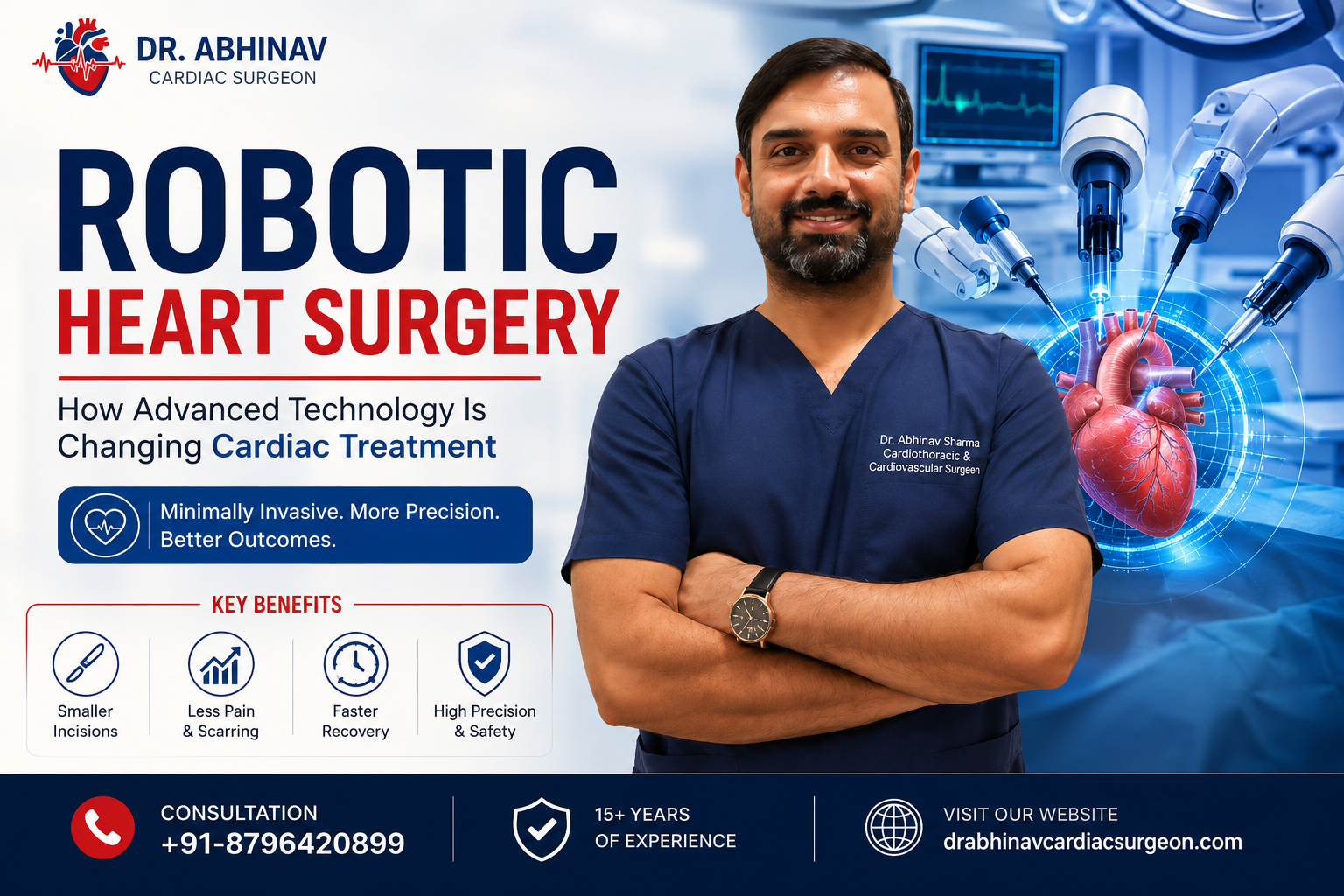
Robotic heart surgery is an advanced form of minimally invasive cardiac surgery in which a surgeon uses a sophisticated robotic surgical system to perform specific procedures.
The surgeon sits at a specialized console and controls the instruments in real time. The robotic system translates these movements into precise actions inside the patient’s chest.
One of the major advantages is visualization. The surgeon can receive a high-definition, magnified, three-dimensional view of the surgical area, helping provide a detailed perspective of delicate cardiac structures.
Most importantly, the robot does not make independent decisions or operate on its own. Every movement is controlled by the surgeon.
Think of the robotic system as an advanced extension of the surgeon’s hands—designed to provide greater precision and flexibility during appropriately selected procedures.
Why Is Robotic Heart Surgery Creating So Much Interest?
For decades, open-heart surgery has saved countless lives and remains an essential treatment for many complex heart conditions.
However, medicine is continuously evolving.
Today, cardiac care is increasingly focused not only on treating the disease effectively but also on reducing unnecessary surgical trauma and helping patients recover as comfortably and efficiently as possible.
Robotic-assisted surgery can support this philosophy.
Depending on the procedure and the patient’s condition, potential advantages may include:
- Smaller surgical incisions
- Less disruption to surrounding tissues
- Reduced scarring
- Potentially less postoperative discomfort
- Earlier mobility in selected cases
- Shorter hospitalisation for some procedures
- Potentially faster return to everyday activities
- Highly controlled surgical movements
These benefits are not guaranteed for every patient. The best surgical technique depends on the individual patient’s medical condition and the complexity of the required procedure.
Heart surgery specialist in Faridabad: Bringing Advanced Cardiac Care Closer to Patients
When someone hears the words “heart surgery,” fear and uncertainty are natural reactions.
Patients often have questions such as:
Will I need open-heart surgery?
Will I have a large scar?
How long will recovery take?
Is minimally invasive surgery suitable for me?
Can robotic surgery be an option?
These questions deserve clear, personalised answers from an experienced cardiac surgeon.
Dr. Abhinav Sharma, Cardiovascular and Thoracic Surgeon, is a highly accomplished Senior Consultant – Cardiothoracic & Vascular Surgery with more than 15 years of experience in advanced cardiac care.
He is recognised for his precision, clinical excellence, and compassionate approach to patient care. His expertise includes complex heart surgeries, with a strong focus on minimally invasive techniques and recovery-focused treatment.
For individuals searching for a Heart surgery specialist in Faridabad, choosing a surgeon who understands both conventional and advanced surgical approaches can be an important part of the treatment journey.
How Does Robotic Heart Surgery Work?
The procedure generally involves several carefully planned stages.
1. Detailed Patient Evaluation
Before recommending robotic surgery, the cardiac team evaluates the patient’s overall health, heart function, medical history, imaging reports, and the specific cardiac problem.
Not every patient is a candidate for robotic surgery.
2. Planning the Surgical Approach
If robotic surgery is considered appropriate, the surgeon carefully plans the access points and surgical strategy.
Advanced imaging and diagnostic tests may help the surgical team understand the patient’s anatomy and plan the procedure.
3. Small Access Points
Instead of relying on one large incision, selected robotic procedures use several smaller openings through which specialised instruments and a camera are introduced.
4. Surgeon-Controlled Robotic Instruments
The surgeon controls the robotic instruments from a console.
These instruments can provide a high degree of movement and precision, which can be particularly valuable when operating around delicate cardiac structures.
5. High-Definition Visualisation
The robotic camera can provide a magnified, three-dimensional view of the surgical field.
This detailed visualisation helps the surgeon identify important structures and perform carefully controlled movements.
6. Completion and Recovery
Once the procedure is completed, the instruments are removed and the small access points are closed.
The patient is then closely monitored during the recovery period, with rehabilitation and follow-up tailored to the individual’s condition.
Which Heart Conditions May Be Treated With Robotic Surgery?
Robotic surgery is not appropriate for every cardiac condition. However, selected patients may benefit from robotic-assisted approaches for certain procedures.
Depending on the patient’s condition and the surgeon’s assessment, robotic techniques may be considered for:
- Selected mitral valve repair procedures
- Certain valve surgeries
- Selected coronary artery procedures
- Removal of certain cardiac masses
- Some congenital heart procedures
- Other carefully selected minimally invasive cardiac operations
The decision is highly individualised.
A procedure that is suitable for one patient may not be appropriate for another. This is why consultation with an experienced cardiovascular and thoracic surgeon is essential.
Robotic Surgery vs Traditional Heart Surgery
It is natural for patients to compare robotic surgery with conventional open-heart surgery.
The key difference is generally how the surgeon reaches the heart, rather than whether the treatment itself is serious.
Traditional surgery may require a larger incision and, depending on the procedure, access through the breastbone.
Robotic-assisted surgery uses specialised instruments and smaller access points for selected procedures.
Robotic-assisted approach may offer:
Smaller incisions:
Smaller access points can result in smaller scars.
Less tissue disruption:
The minimally invasive approach can reduce disruption to surrounding tissues in appropriately selected procedures.
Potentially smoother recovery:
Some patients may experience a faster recovery compared with conventional approaches, although recovery varies from person to person.
Enhanced visualisation:
The surgeon can work with a magnified, high-definition view of the operative area.
Precise instrument control:
Robotic instruments can provide controlled movements that are useful during delicate procedures.
However, traditional surgery remains the right option for many patients, particularly when the condition is complex or minimally invasive surgery would not provide the safest approach.
Does Robotic Surgery Mean Less Pain?
One of the most common questions patients ask is whether robotic surgery means they will experience no pain.
The answer is more nuanced.
Robotic heart surgery is still major surgery, and some discomfort during recovery is expected. However, because selected robotic procedures use smaller access points and may involve less tissue disruption, some patients may experience less postoperative discomfort compared with certain conventional surgical approaches.
Pain management is an important part of postoperative care, and the medical team will provide appropriate medication and guidance throughout recovery.
How Long Does Recovery Take?
Recovery depends on several factors, including:
- The type of heart procedure
- The patient’s age and overall health
- Existing medical conditions
- Whether the procedure was robotic, minimally invasive, or open
- The complexity of the surgery
- Individual healing response
Some patients undergoing minimally invasive procedures may return to normal activities sooner than patients undergoing traditional open surgery.
However, patients should never compare their recovery timeline directly with someone else’s.
Every heart is different, and every recovery journey is different.
Following the surgeon’s instructions, attending follow-up appointments, taking prescribed medications, maintaining appropriate physical activity, and following cardiac rehabilitation recommendations can all support recovery.
Is Robotic Heart Surgery Safer Than Open Surgery?
This is an important question—and the answer is not simply “yes.”
Robotic surgery can offer important advantages for appropriately selected patients, but it is not automatically safer for every patient or every procedure.
The safest approach is the one that provides the best balance between effective treatment and surgical risk for the individual patient.
Sometimes that may be robotic surgery.
Sometimes a conventional minimally invasive procedure may be preferable.
And sometimes traditional open surgery may be the safest and most effective option.
The surgeon’s experience and clinical judgment are therefore extremely important.
Why Surgeon Experience Matters More Than Technology Alone
A robotic surgical system is an advanced tool, but a tool is only as effective as the expertise behind it.
Cardiac surgery requires detailed anatomical knowledge, technical skill, careful decision-making, and the ability to respond to unexpected situations.
An experienced cardiac surgeon understands:
- Which patients may benefit from robotic surgery
- Which procedures are suitable for robotic assistance
- When minimally invasive surgery is preferable
- When open surgery may be safer
- How to manage complex cardiac conditions
- How to create an individualised treatment and recovery plan
This combination of human expertise + advanced technology is what makes modern robotic cardiac surgery so promising.
Heart surgery specialist in Faridabad: A Modern Approach to Cardiac Care
For patients and families, the goal of heart treatment is not simply to complete a surgical procedure.
The real goal is to help the patient move forward with confidence.
That means identifying the right treatment, choosing an appropriate surgical technique, reducing avoidable surgical trauma wherever possible, and providing comprehensive care before and after surgery.
Dr. Abhinav Sharma – Cardiovascular and Thoracic Surgeon brings over 15 years of experience to the field of cardiothoracic and vascular surgery.
As a Senior Consultant, he focuses on advanced cardiac treatment with an emphasis on precision, minimally invasive techniques, complex heart surgery, and patient-centred care.
His approach reflects an important principle of modern cardiac medicine:
Advanced technology works best when combined with experienced surgical hands and personalised patient care.
What Should You Ask Your Cardiac Surgeon?
If robotic or minimally invasive heart surgery has been suggested, consider discussing these questions during your consultation:
- Is robotic surgery suitable for my specific heart condition?
- What are the benefits and limitations of the robotic approach in my case?
- Would minimally invasive or open surgery be more appropriate?
- What are the possible risks and complications?
- How long might my hospital stay be?
- What should I expect during recovery?
- When can I return to work and normal activities?
- How much experience does the surgical team have with this procedure?
- What happens if the planned minimally invasive approach needs to be changed during surgery?
A good consultation should leave you with a clear understanding of your treatment options rather than more confusion.
The Future of Heart Surgery Is More Precise, Minimally Invasive and Patient-Focused
Robotic heart surgery represents one of the most exciting developments in modern cardiac treatment.
As technology continues to evolve, surgeons are gaining increasingly sophisticated tools to perform selected heart procedures through minimally invasive approaches.
But the future of cardiac surgery is not about replacing surgeons with robots.
It is about giving experienced surgeons better tools to perform carefully selected procedures with greater precision and control.
For the right patient, robotic-assisted surgery may provide the advantages of a minimally invasive approach while maintaining the surgical expertise required for complex cardiac treatment.
If you have been advised to undergo heart surgery or want to know whether a robotic or minimally invasive approach could be appropriate for your condition, speak with an experienced cardiovascular and thoracic surgeon.
About Dr. Abhinav Sharma
Dr. Abhinav Sharma – Cardiovascular and Thoracic Surgeon is a highly accomplished Senior Consultant – Cardiothoracic & Vascular Surgery with over 15 years of experience in advanced, patient-centric cardiac care.
Known for precision, clinical excellence, and a compassionate approach, he specialises in complex heart surgeries with a strong focus on minimally invasive techniques and faster recovery outcomes.
For patients looking for a Heart surgery specialist in Faridabad, an expert consultation can help determine the most appropriate treatment approach based on the individual’s heart condition, medical history, and overall health.
Your heart deserves more than a treatment—it deserves the right treatment, the right technology, and the right surgical expertise.