
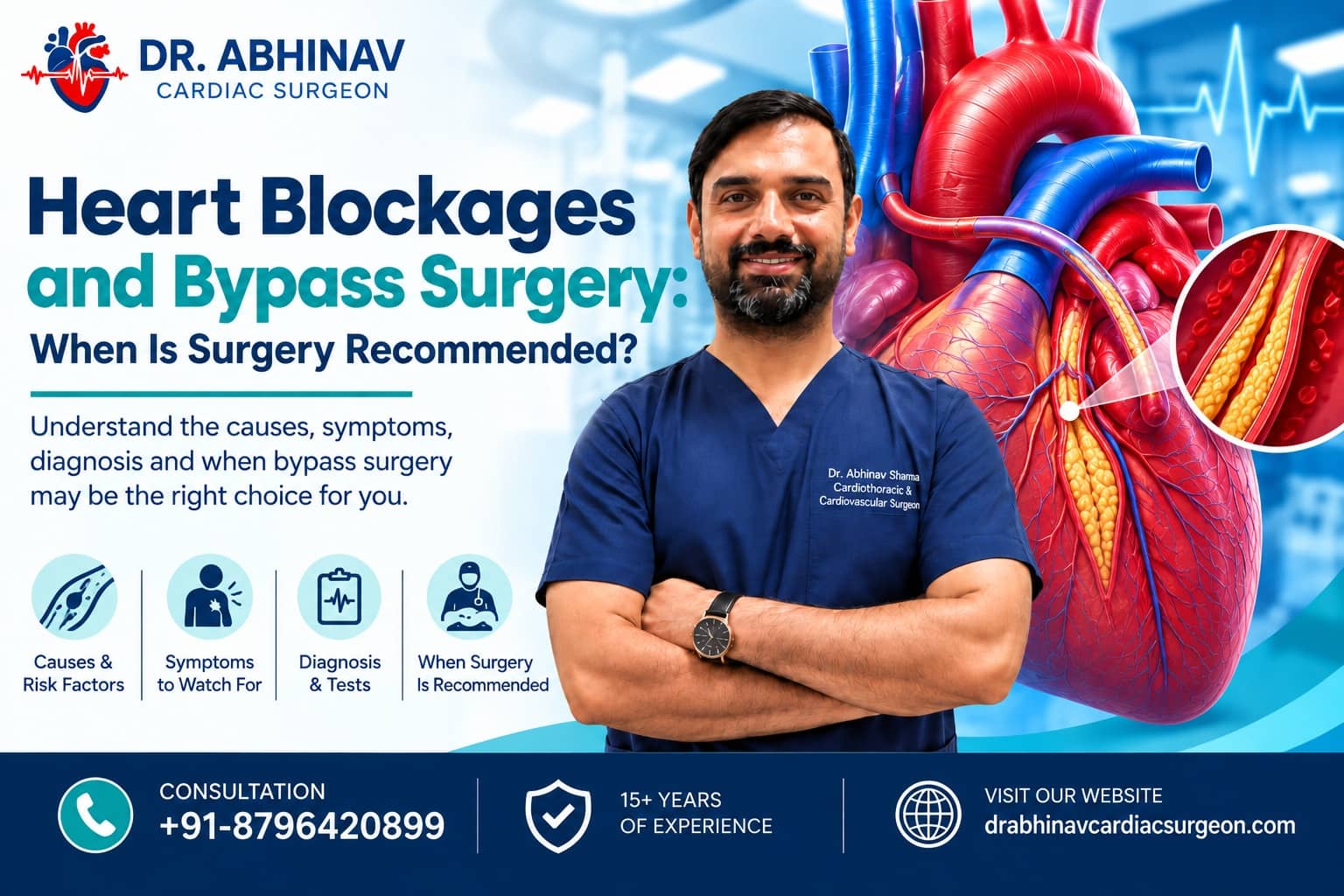
Heart blockages are a common consequence of coronary artery disease (CAD), a condition in which plaque gradually builds up inside the arteries that supply blood to the heart. As the arteries become narrowed, the heart may not receive enough oxygen-rich blood, particularly during physical activity.
Not every heart blockage requires bypass surgery. Depending on the severity and location of the blockage, treatment may include lifestyle changes, medications, angioplasty, stenting, or surgery. However, when coronary artery disease is extensive or complex, coronary artery bypass grafting (CABG), commonly known as bypass surgery, may be recommended.
Understanding when bypass surgery is needed, how doctors evaluate heart blockages, what the procedure involves, and what recovery looks like can help patients make informed decisions about their treatment.
What Causes Heart Blockages?
Heart blockages usually develop because of atherosclerosis, a condition in which fatty deposits, cholesterol, calcium, and other substances accumulate within the walls of the coronary arteries.
Several factors can increase the risk of coronary artery disease, including:
- High cholesterol
- High blood pressure
- Diabetes
- Smoking or tobacco use
- Obesity
- Physical inactivity
- Unhealthy dietary habits
- Increasing age
- Family history of heart disease
- Long-term stress and other cardiovascular risk factors
Over time, plaque can become larger and restrict blood flow through the artery. In some cases, a plaque may rupture and contribute to the formation of a blood clot, potentially causing a heart attack.
What Symptoms Can Heart Blockages Cause?
Some people with coronary artery disease may have no obvious symptoms, while others develop symptoms when the heart requires more blood and oxygen.
Common symptoms can include:
- Chest pain or pressure, commonly called angina
- Breathlessness during physical activity
- Unusual tiredness
- Reduced exercise tolerance
- Discomfort spreading to the arm, shoulder, back, neck, or jaw
- Dizziness or light-headedness in some cases
Symptoms can vary considerably from one person to another. New, severe, or persistent chest discomfort, particularly when accompanied by breathlessness, sweating, nausea, or fainting, requires urgent medical evaluation.
How Are Heart Blockages Diagnosed?
Before deciding on treatment, a cardiologist evaluates the patient’s symptoms, medical history, risk factors, and heart function.
Depending on the situation, investigations may include:
ECG
An electrocardiogram records the electrical activity of the heart and can provide information about heart rhythm and certain signs of previous or ongoing heart problems.
Echocardiogram
An echocardiogram uses ultrasound to evaluate the heart’s structure and pumping function.
Stress Testing
In selected patients, stress testing can help determine how the heart responds to increased physical demand.
Coronary Angiography
Coronary angiography is an important investigation for understanding the location and severity of coronary artery blockages. It can help the cardiac team determine whether treatment with medication, angioplasty, or bypass surgery may be appropriate.
Additional imaging or laboratory tests may also be recommended based on the patient’s condition.
When Is Bypass Surgery Recommended?
One of the most common questions patients ask after being diagnosed with heart blockages is: “Do I need bypass surgery?”
The answer depends on several factors. Bypass surgery may be considered when the coronary arteries have significant or complex disease that is unlikely to be adequately treated with medication or angioplasty alone.
CABG may be recommended in situations such as:
- Significant blockage in the left main coronary artery
- Multiple major coronary arteries with significant disease
- Complex or extensive coronary artery disease
- Certain patterns of disease in people with diabetes
- Significant coronary disease associated with reduced heart pumping function
- Blockages that are difficult to treat effectively with angioplasty
- Recurrent problems after previous angioplasty or stenting in selected cases
The decision should be individualized. A patient with several blockages does not automatically require bypass surgery, just as the number of blockages alone does not determine the best treatment.
Your cardiologist and cardiac surgeon may review your angiography, heart function, symptoms, medical history, and other health conditions before recommending the most appropriate treatment.
Bypass Surgery or Angioplasty: Which Is Better?
Bypass surgery and angioplasty are different approaches to treating coronary artery disease.
Angioplasty, often performed with stent placement, uses a catheter to open a narrowed coronary artery and improve blood flow.
Bypass surgery, or CABG, creates an alternative route around the blocked section of a coronary artery using a healthy blood vessel graft.
Neither treatment is universally better for every patient. The appropriate option depends on the patient’s coronary anatomy, number and location of blockages, diabetes status, heart function, previous treatments, and overall health.
For complex or extensive coronary artery disease, bypass surgery may offer important advantages in appropriately selected patients.
What Is Coronary Artery Bypass Grafting (CABG)?
CABG is a surgical procedure designed to create a new pathway for blood to reach the heart muscle.
During the procedure, the surgeon uses a healthy blood vessel from another part of the body, such as the chest, arm, or leg, and connects it beyond the blocked portion of the coronary artery.
This new pathway allows blood to flow around the blockage.
The type of graft and surgical technique used depends on the patient’s condition and the surgeon’s assessment.
Different Approaches to Bypass Surgery
Modern cardiac surgery offers several techniques, and the appropriate approach depends on the patient’s anatomy and medical requirements.
Off-Pump Bypass Surgery
In off-pump, or beating-heart bypass surgery, CABG is performed while the heart continues to beat rather than using a heart-lung bypass machine.
It may be considered for selected patients based on their coronary anatomy and overall health.
Total Arterial CABG (BIMA Bypass)
Total Arterial CABG uses arterial grafts for bypasses. In selected patients, both internal mammary arteries may be used, known as bilateral internal mammary artery (BIMA) bypass.
The suitability of this technique depends on individual patient factors.
Minimally Invasive Cardiac Surgery
Minimally Invasive Cardiac Surgery (MICS) uses smaller surgical access points for selected cardiac procedures.
Not every patient is a candidate for a minimally invasive approach. The surgical team determines suitability after evaluating the patient’s condition and the procedure required.
Bypass Surgery Doctor in Faridabad: What Should You Consider?
If you have been diagnosed with significant coronary artery disease or have been advised to undergo CABG, choosing an experienced bypass surgery doctor in Faridabad is an important part of planning your treatment.
A cardiac surgeon evaluates your angiography, heart function, medical history, previous cardiac procedures, and other health conditions before recommending an appropriate surgical approach.
Dr. Abhinav Sharma, Cardio-thoracic & Vascular Surgeon, provides surgical treatment for coronary artery disease and a range of cardiac, thoracic, and vascular conditions.
His cardiac surgical services include:
- Minimally Invasive Cardiac Surgery (MICS)
- Total Arterial CABG (BIMA Bypass)
- Off-pump (Beating-heart) Bypass Surgery
- Valve Repair and Replacement
- Aortic Surgery
- Redo and Complex Cardiac Surgeries
- Pulmonary Endarterectomy
- Thoracic Surgical Procedures
- Vascular Surgeries
- Deep Vein Thrombosis (DVT) treatment
- Varicose Veins treatment
The most suitable treatment and surgical technique are determined after a detailed evaluation of each patient’s condition.
How to Prepare for Bypass Surgery
If CABG has been recommended, your medical team will provide specific instructions before surgery.
Preparation may involve:
Medical Evaluation
You may undergo blood tests, ECG, echocardiography, chest imaging, coronary angiography, and other investigations required to assess your health and prepare for surgery.
Medication Review
Tell your doctor about all medications and supplements you are taking. Some medicines may need to be adjusted before surgery.
Never stop blood thinners or other prescribed medicines without medical advice.
Managing Existing Conditions
Conditions such as diabetes, high blood pressure, high cholesterol, and kidney problems should be appropriately managed before surgery whenever possible.
Stopping Tobacco
Stopping smoking and other forms of tobacco use can support healing and reduce cardiovascular and surgical risks.
Planning for Recovery
Arrange support at home and discuss your expected recovery, activity restrictions, medications, follow-up appointments, and cardiac rehabilitation with your healthcare team.
What Happens After Bypass Surgery?
After CABG, patients are initially monitored closely, often in a cardiac intensive care unit. Once stable, they are transferred to a regular hospital room.
Recovery generally includes:
- Pain management
- Monitoring of heart function
- Wound care
- Breathing exercises
- Gradual physical activity
- Medication management
- Nutritional guidance
- Cardiac rehabilitation when recommended
Recovery time varies depending on the type of surgery, overall health, age, and presence of other medical conditions.
Your surgeon will provide specific instructions about walking, lifting, driving, returning to work, wound care, and other daily activities.
Life After Bypass Surgery
Bypass surgery can improve blood flow to the heart, but it does not eliminate the underlying risk factors for coronary artery disease.
Long-term heart health requires continued attention to lifestyle and medical care.
Patients may be advised to:
- Follow a heart-healthy diet
- Take prescribed medicines regularly
- Maintain healthy blood pressure and cholesterol levels
- Control diabetes
- Avoid smoking and tobacco
- Maintain a healthy weight
- Stay physically active according to medical advice
- Manage stress
- Attend regular cardiac follow-ups
- Participate in cardiac rehabilitation when recommended
These measures can help support cardiovascular health and reduce the risk of future heart-related problems.
When Should You Consult a Bypass Surgery Doctor in Faridabad?
If you have been diagnosed with significant coronary artery disease, have persistent symptoms despite treatment, or have been advised that bypass surgery may be required, a consultation with a cardiac surgeon can help you understand your treatment options.
Bring your coronary angiography, ECG, echocardiogram, blood test reports, medication list, and previous cardiac treatment records to your consultation whenever available.
A cardiac surgeon can review your reports and explain whether CABG, angioplasty, medication, or another treatment approach may be appropriate for your condition.
Conclusion
Heart blockages do not always require bypass surgery. The right treatment depends on the severity and location of blockages, heart function, symptoms, medical history, and overall health. Depending on the condition, options may include medication, angioplasty, off-pump bypass surgery, Total Arterial CABG (BIMA Bypass), or minimally invasive cardiac surgery.
Dr. Abhinav Sharma – Cardiovascular and Thoracic Surgeon, is a Senior Consultant – Cardiothoracic & Vascular Surgery with over 15 years of experience, specialising in complex cardiac surgeries and minimally invasive techniques.
For those seeking a Heart Surgery Specialist in Faridabad, expert evaluation can help determine the most appropriate treatment for your individual heart condition.The right treatment begins with the right diagnosis, technology, and surgical expertise